Dragonflies at Coffee Creek – A Moment of Flight


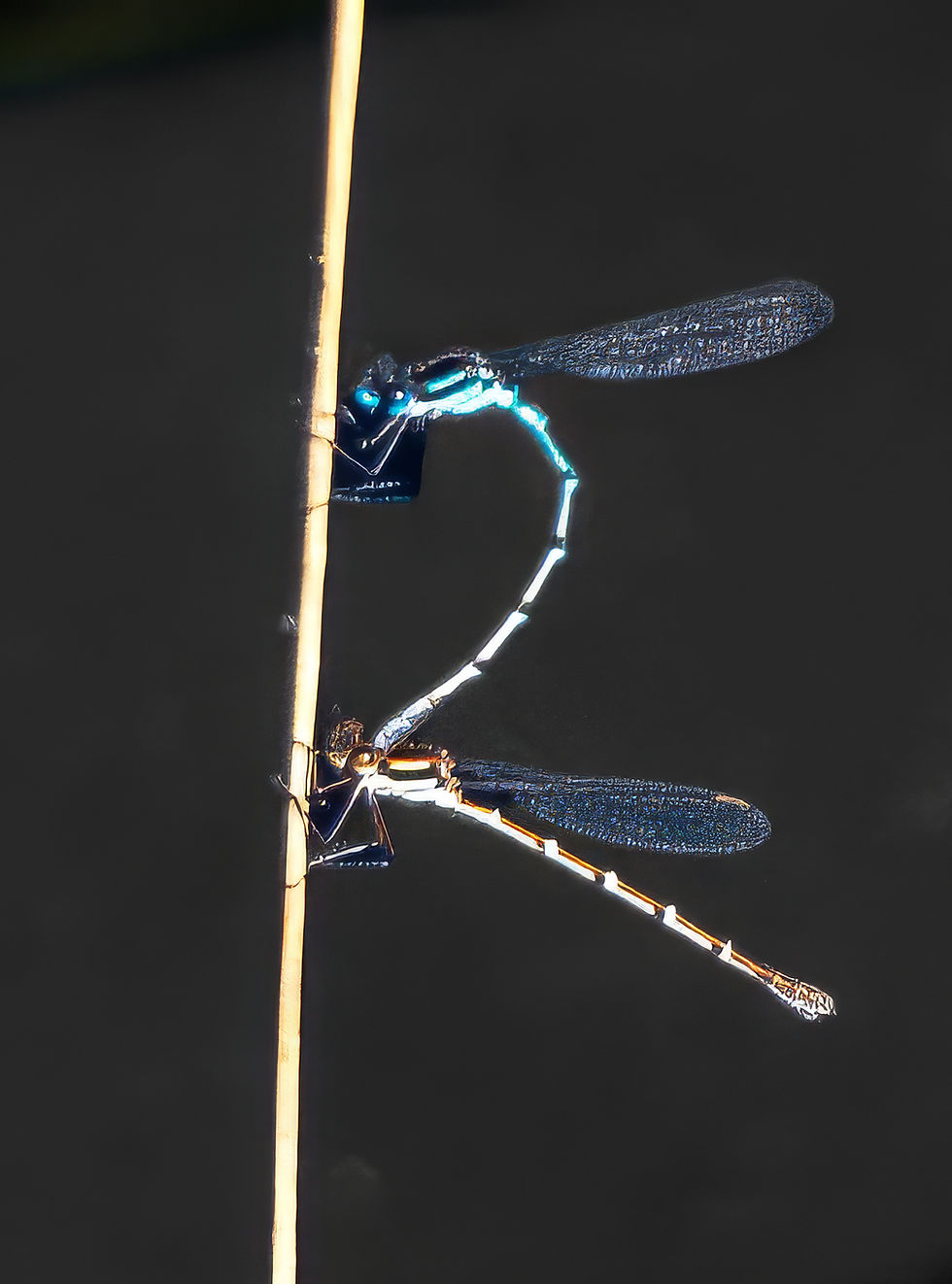
There are few places around Hobart where quiet wetlands still feel truly wild. Tucked inside the Peter Murrell Reserve in southern Tasmania, Coffee Creek is one of those places. On calm days the water sits almost perfectly still, the reeds barely moving, and the air fills with small flashes of colour and motion — dragonflies patrolling their territory above the water.
These photographs were taken during one of those moments when the light was soft and the dragonflies were actively hunting.
Masters of the Air
Dragonflies are among the most accomplished fliers in the insect world. They can hover, glide, dart sideways and even fly backwards. Watching them along Coffee Creek is like observing tiny aerial hunters, constantly scanning the water surface for prey.
The dragonfly in flight in these images shows the classic posture of a hunting adult — wings extended, body straight, eyes forward. Their enormous compound eyes give them nearly 360-degree vision, allowing them to track insects with extraordinary precision. Once they lock onto a target, the chase is usually brief.
A Wetland Hunter
Coffee Creek provides an ideal habitat. Slow-moving water, aquatic vegetation, and abundant insects make it perfect for dragonflies at every stage of their life cycle.
What many people don’t realise is that dragonflies spend most of their lives underwater. As larvae (called nymphs), they live in the creek and surrounding wetlands for months or even years. These underwater predators feed on mosquito larvae, tadpoles, and other small aquatic creatures before finally emerging from the water to transform into the winged adults we see flying above the reeds.
When conditions are right, adults patrol the same stretch of water repeatedly, defending territories and searching for mates.
The Colours of Tasmanian Dragonflies
The dragonfly resting on the leaf in these photographs shows the metallic blues and greens often seen in Australian damselflies and dragonflies. These colours are not just beautiful — they can also signal maturity and help individuals recognise members of their own species.
Tasmania hosts a surprising diversity of dragonflies, especially around wetlands like those in the Peter Murrell Reserve. Many species remain active through the warmer months, particularly on still days when the sun warms the water and insects become abundant.
Photographing Dragonflies
Dragonflies are both challenging and rewarding subjects for photography. Their speed makes them difficult to capture in flight, but patience often pays off. Many individuals return repeatedly to the same perch or patrol route, allowing a careful photographer to anticipate their movements.
Moments when they hover or pause briefly above the water can produce striking images — wings suspended mid-beat and eyes catching the light.
At Coffee Creek, the combination of still water and open sky can create a dark, uncluttered background, helping the fine details of the wings and body stand out.
A Small Reminder of Healthy Wetlands
Dragonflies are more than beautiful insects — they are also indicators of healthy freshwater ecosystems. Because their life cycle depends on clean water and abundant aquatic life, their presence often signals that a wetland is functioning well.
Standing beside Coffee Creek and watching them patrol the water is a quiet reminder of how much life exists in these small pockets of habitat.
Sometimes the smallest subjects can reveal the most about a place.
I love how this highlights the importance of wetlands through dragonflies. It’s a great reminder to protect these delicate ecosystems. https://hianimeto.wiki